Learn to Draw
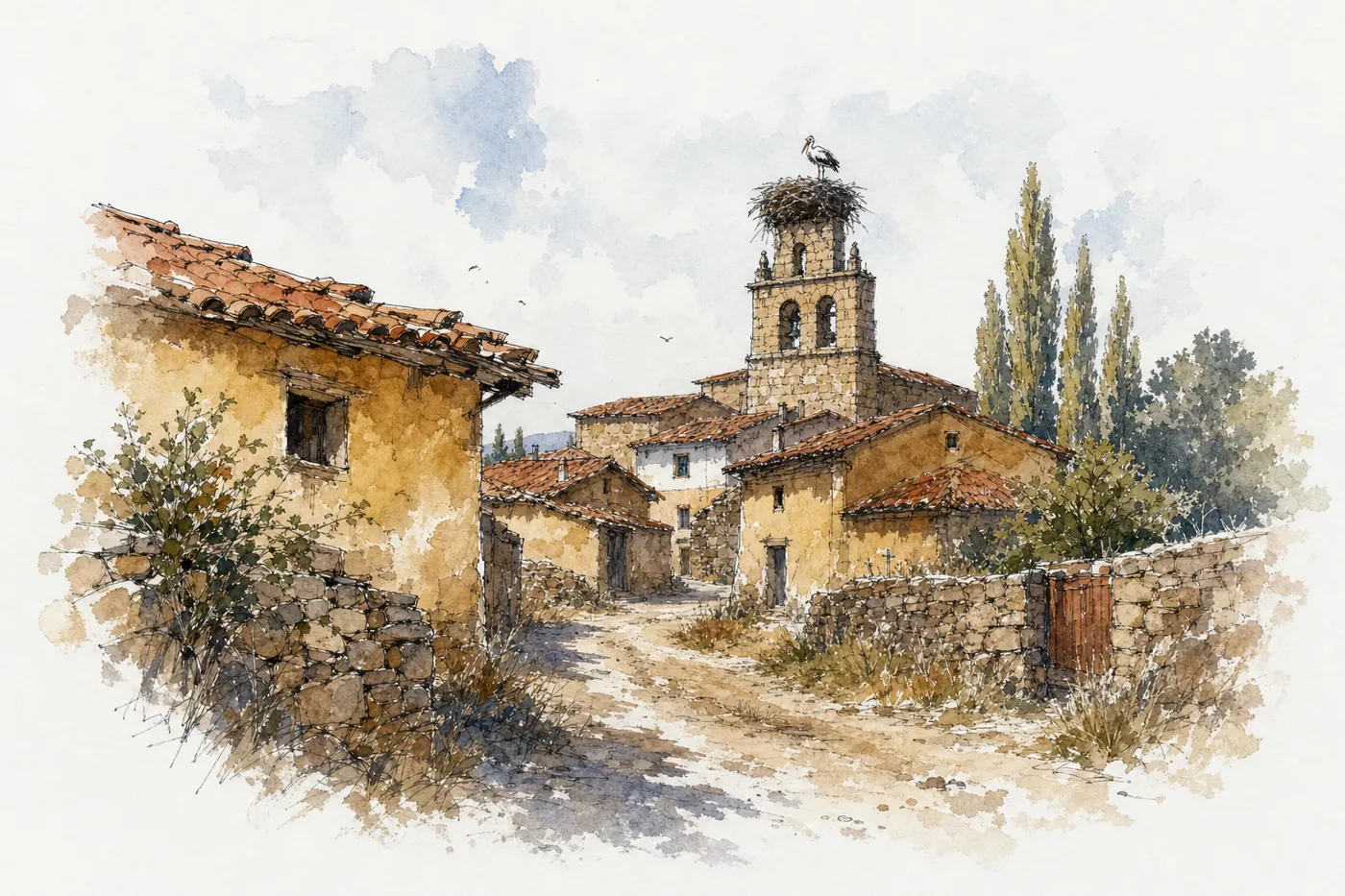
A self-paced course in drawing what you see. It starts with a single pen line and ends with pen and wash sketches made on location: villages, trees, fields and animals.
How the course works
Drawing is a skill you learn by seeing, not a talent you have or lack. John Ruskin, who wrote a drawing course for people teaching themselves in 1857, said he had never met anyone who could not learn to draw at all. This course trains the seeing first, then the medium, then the subjects.
- Mostly drawing, very little reading. Each module is a handful of short exercises on real subjects. Ideas are explained only when an exercise needs them.
- Every exercise is a clear brief: setup, time, steps, why you are doing it, and what success looks like.
- Draw from life. Your kitchen, your street, the field behind the house. Photos are for checking, not for copying.
- Go at your own pace. There is no schedule. Each module ends with a short list of things that tell you you’re ready to move on.
- Ink from the start, paint early. You draw in pen from Module 1 and pick up a brush in Module 4.
Alongside the modules runs a daily practice of ten minutes in a sketchbook, plus a weekly page that’s purely for fun.
Part A: Seeing
The perceptual skills underneath every drawing: edges, shapes, proportions, light and colour.
- 0Setup & baselineGet the kit, start the sketchbook habit, and draw your “before” set.
- 1Line confidenceContour drawing and committing to ink.
- 2Shapes & spacesBig shapes, negative space and edges. Thumbnails begin.
- 3Measuring & relationshipsSighting, plumb lines and perspective by eye.
- 4Light & valueValue scales, hatching and your first monochrome wash.
- 5Detail & textureA vocabulary of marks for stone, adobe, bark and fur.
- 6Seeing colourHue, value, temperature, and local versus light colour.
- 7CompositionFraming, editing, focal points and white space.
Part B: Medium
How to handle waterproof ink and watercolour together.
Part C: Subjects
Applying it all on location.
- 9Plants & treesLeaves, branching and massed foliage.
- 10Buildings & villagesWalls with depth, doorways and village corners.
- 11Landscape, sky & waterDepth planes, skies in one go, reflections.
- 12AnimalsGesture, quick poses and subjects that won’t keep still.
- 13People in scenesOptional: figures in a street scene, at the right size.
Getting feedback
Each module has a short rubric. Photograph a drawing, give it to the critique skill for Claude, and you get a score for each rubric point, what’s working, and one thing to fix next.